Seattle AI Society
A meetup group fostering curiosity about the societal impacts of artificial intelligence
It was a dark and stormy night in early December 2022.
Kidding. Although, not really. It’s always dark and stormy in December in Seattle.
I had spent years working with emerging tech at Microsoft, but it wasn’t until ChatGPT was released that I had trouble sleeping. For the first time, a powerful generative AI system had been packaged in a way that anyone could use. It wasn’t just a tool for researchers or technologists anymore. It was becoming the default interface between humans and information. Humans and expression. Humans and each other. Humans and themselves. Humans and…
At one o’clock in the morning, I gave up trying to sleep, and took my iPad down the block to my favorite dive bar. I showed the ChatGPT app to the bartender. Without missing a beat, he typed:
“Does God exist?”
Well, that didn’t help.
Before the holidays sent us all home to our loved ones, I snuck in one last coffee with a colleague who had recently been tasked with shaping AI safety policies. She told me she was currently working to prevent AI from freely sharing recipes for methamphetamine.
Hm. That’s good, right? Probably? Or is this just The Anarchist Cookbook all over again? And, who gets to decide what else is blocked? If AI becomes the primary way people learn, wonder, strategize, and create, then the people building these systems will hold extraordinary influence over human expression and access to knowledge.
My best friend and I rang in the 2023 new year together by posting a message on Meetup.com: anyone want to talk about AI?
Thirty-two random people showed up at our apartment the next week. Some were engineers. Others were artists, entrepreneurs, students, writers, advocates, philosophers, and curious neighbors. Everyone seemed to be carrying the same nervous energy. AI was arriving faster than society knew how to process, and people were looking for a place to think about it together.
That evening launched the Seattle AI Society.
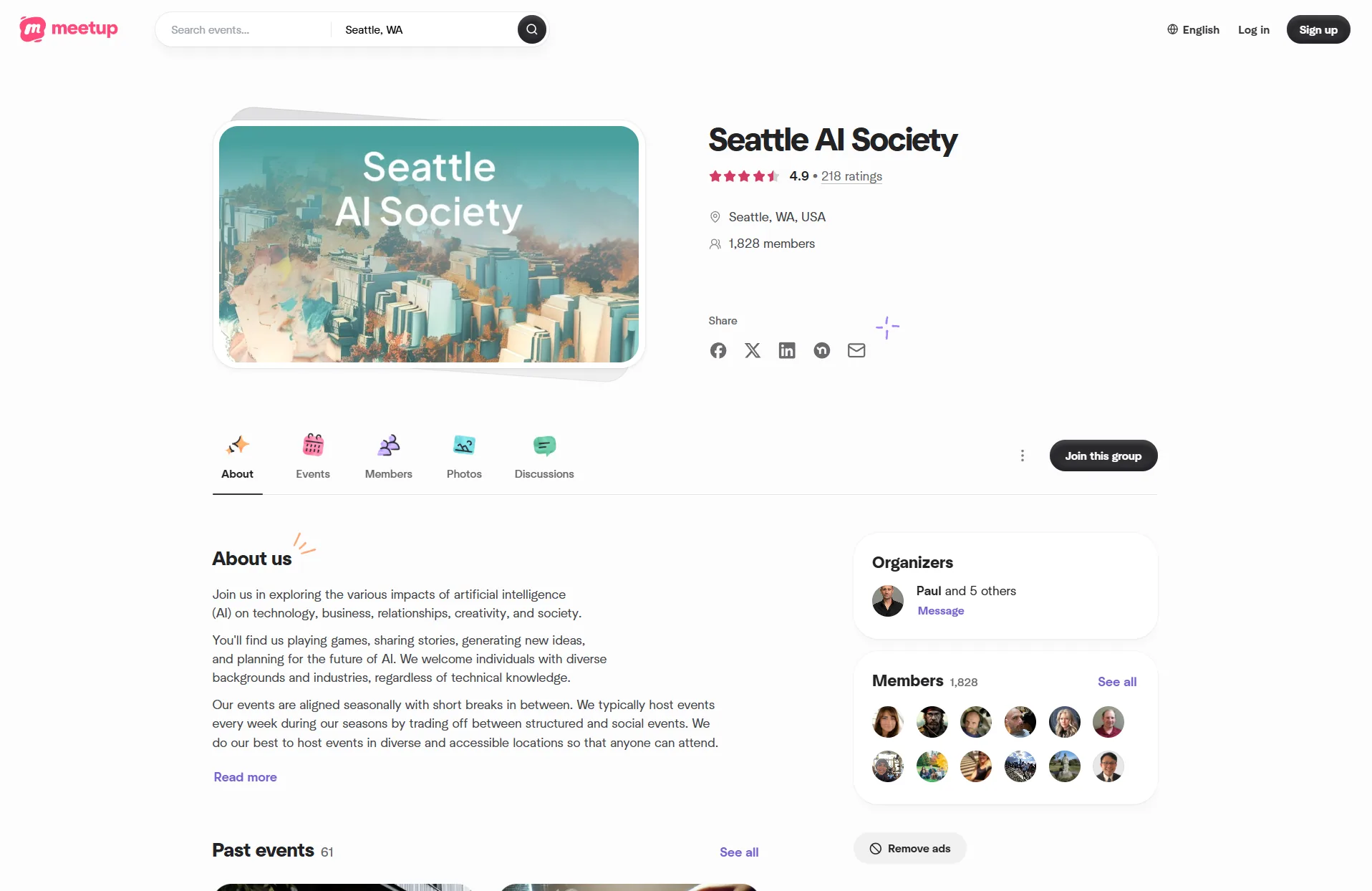
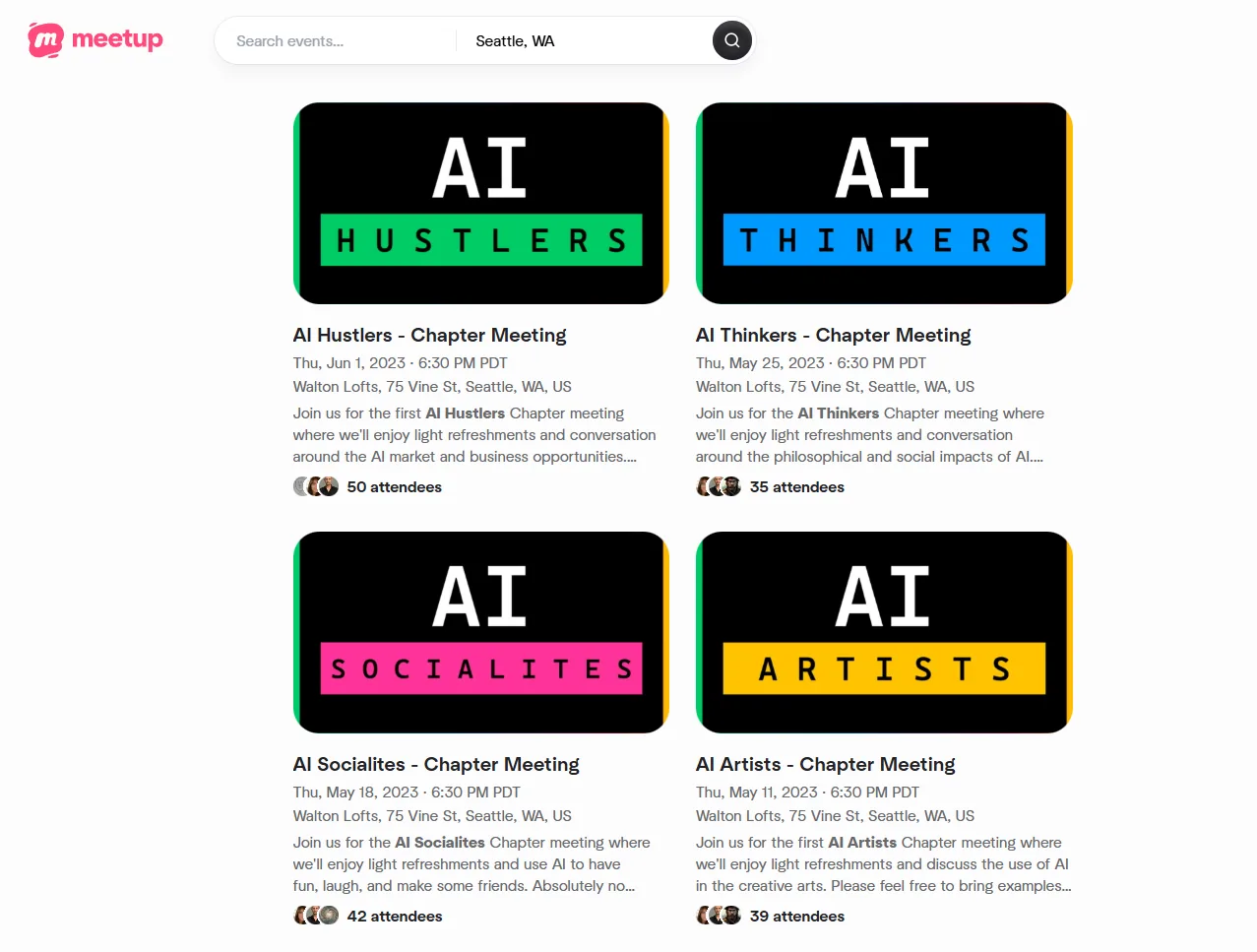
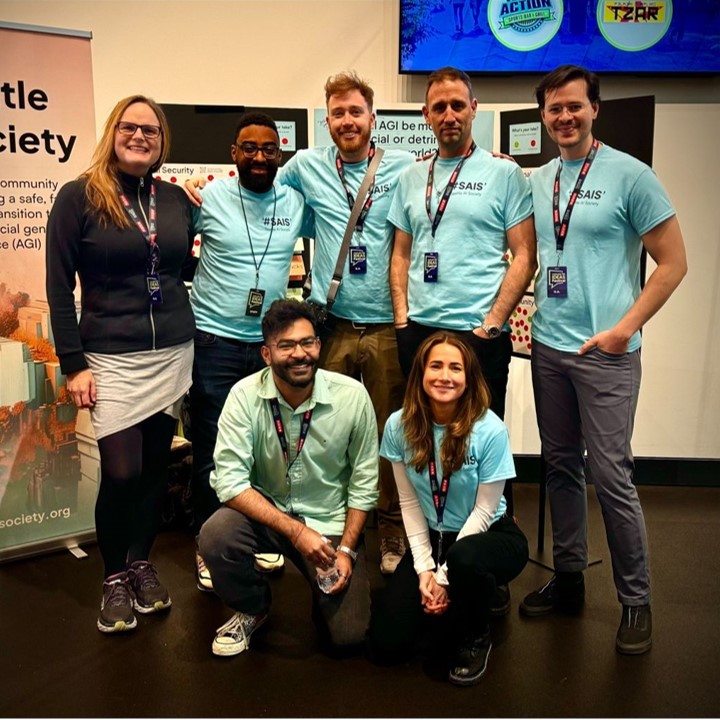
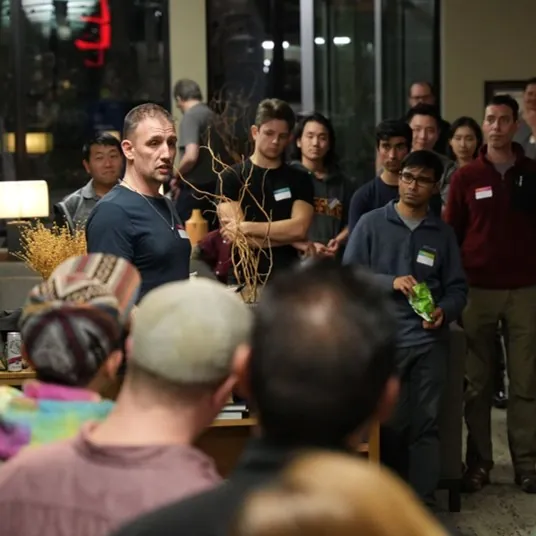
Alongside my co-founder, Paul Payne, a Principal Research Engineer at Microsoft, and many other volunteers, organizers, and community members, we built a space dedicated to exploring the social, ethical, and philosophical implications of artificial intelligence. What began as a conversation in our living room grew into a community of more than 1,800 members and over 60 events in the Belltown neighborhood of Seattle.
After nearly 100 people showed up on evening, we decided to break into Chapters with unique focus: The Hustlers for the entrepreneurs and engineers, The Artists for the creatives, The Thinkers for the philosophers, and The Socialites who just want to have some fun.
We did not host speakers or panels. Instead, for each event, we designed experiences that encouraged participants to move beyond passive consumption and engage directly with ideas. Their own ideas.
One of my favorite activities asked a simple question:
What is one thing you wish everyone in the world had more of?
People responded with ideas like empathy, water, knowledge, trust, and time. We then explored how AI might increase or decrease access to those things and what tradeoffs might emerge.
Another night I won’t forget: we used AI to write comedy sketches and then performed them for each other. My sister prompted hers to skewer the latest Justin Bieber and Selena Gomez drama, and the whole room lost it.
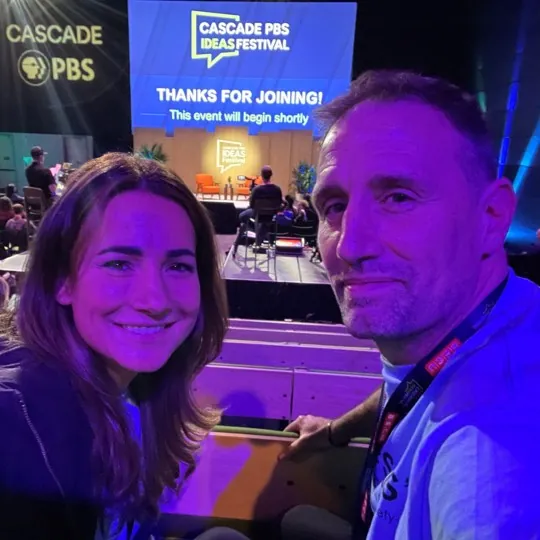
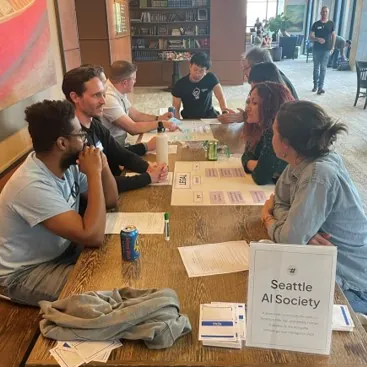
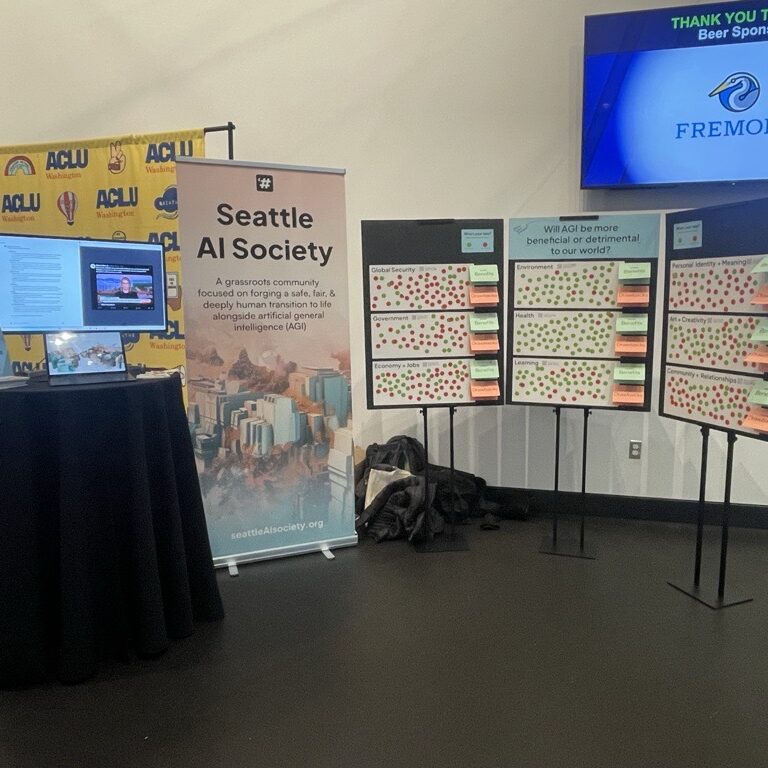
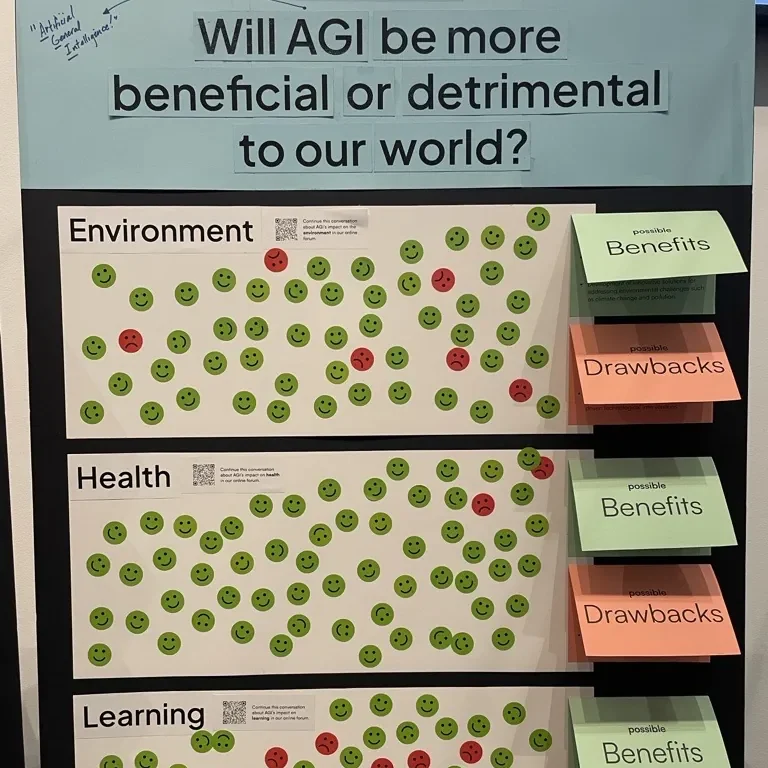
As the community grew, we began creating larger public experiences. One highlight was an interactive exhibit we designed for the PBS Ideas Festival. It included a sticker board to vote on whether AGI (artificial general intelligence) would be more beneficial or detrimental across various domains of society (e.g. global security, economy, health, learning, art, personal identity, etc.); and a custom GPT called Rhetoric & Bias Analyzer that invited participants to examine any media for persuasion techniques, omissions, framing choices, and bias. As always, our goal was not to tell people what to think but rather spark conversation, curiosity, and critical thinking.
Looking back, what I am most proud of is not the growth of the organization or the number of events we hosted. It is that, during a period of time where technology was moving extraordinarily fast, we created a place where people could slow down, ask difficult questions, and think through them together.